The cable-stayed bridge with the highest clearance in Vietnam is about
to be completed
(Dan Tri) - After nearly 10 years of construction, Binh Khanh Bridge - the cable-stayed bridge with the highest clearance in Vietnam is about to be completed, becoming an architectural highlight connecting the economic region south of Ho Chi Minh City.
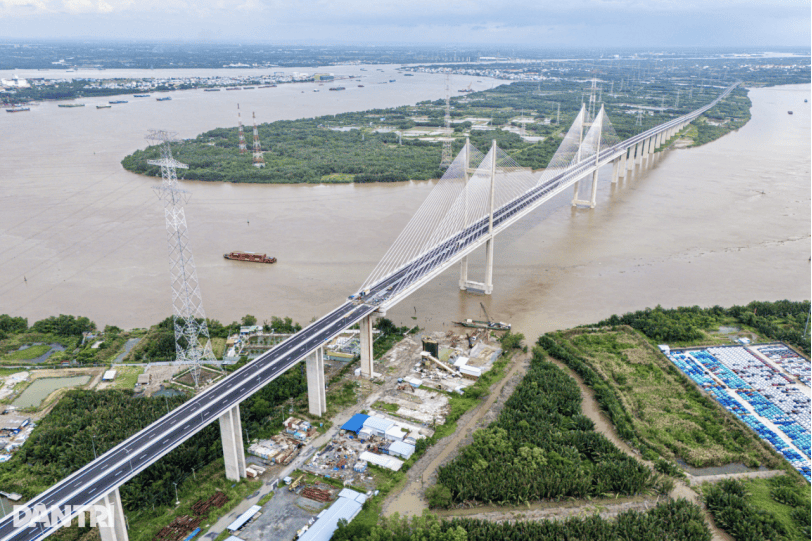
Binh Khanh Bridge, one of the two largest cable-stayed bridges on the Ben Luc - Long Thanh Expressway, is entering the final stage of completion, ready to connect the two banks of the Soai Rap River and open a new era for inter-regional traffic in the South.
With a total investment of more than 2,800 billion VND, the Binh Khanh Bridge crosses the Soai Rap River, connecting Hiep Phuoc Commune (formerly Nha Be District) and Binh Khanh Commune (formerly Can Gio District). The project started construction in August 2015 and is an important part of the Ben Luc - Long Thanh Expressway.
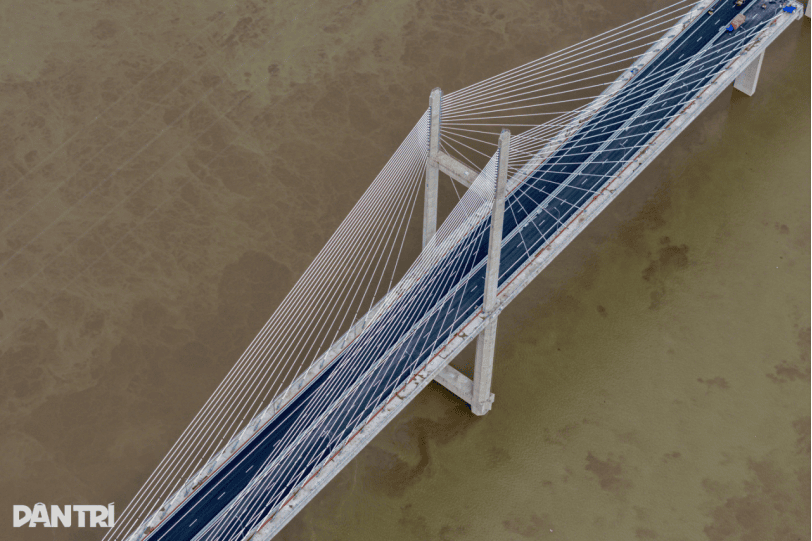
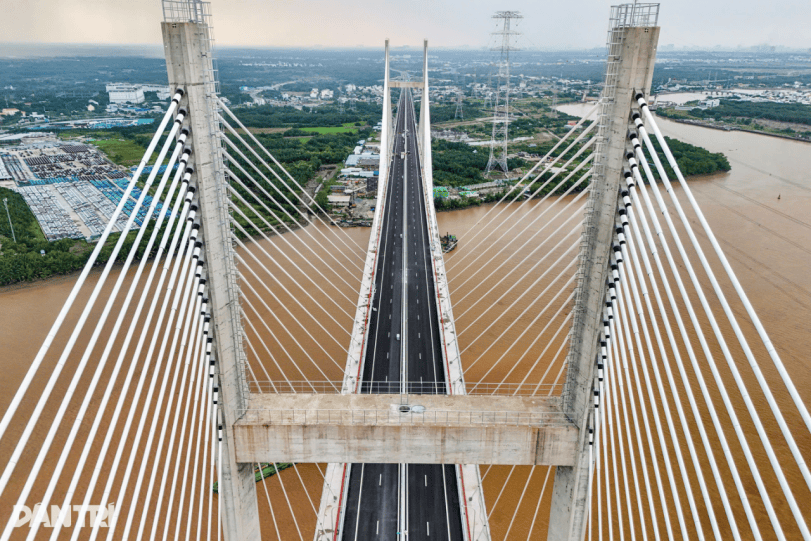
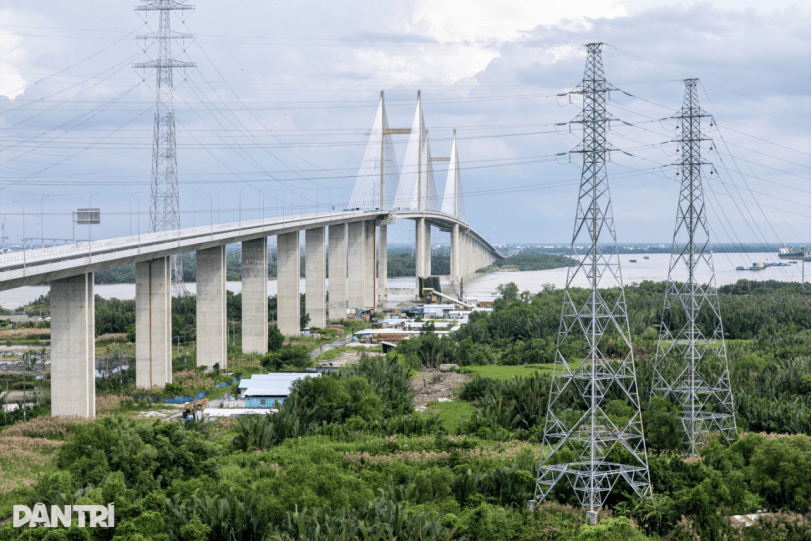
Binh Khanh Bridge is 2.76km long, of which the main bridge is 763m long. The highlight of the project is the double-plane cable-stayed design with a 135m high H-shaped tower, ensuring a clearance of 55m for navigation - currently the highest clearance height in Vietnam.
The project faced many challenges, especially the stagnation period from the end of 2018 to the end of 2022 due to ODA capital problems. However, with the determination to restart the entire Ben Luc - Long Thanh expressway, the Binh Khanh bridge package was resumed at the end of 2023 and is being rushed to completion.
Binh Khanh Bridge is designed with a cross-section of more than 20m wide, including 4 lanes and 2 emergency lanes, allowing a design speed of 80-100km/h. The modern cable-stayed structure not only ensures load-bearing capacity but also creates an impressive architectural highlight, affirming Vietnam's capacity to build large bridges.
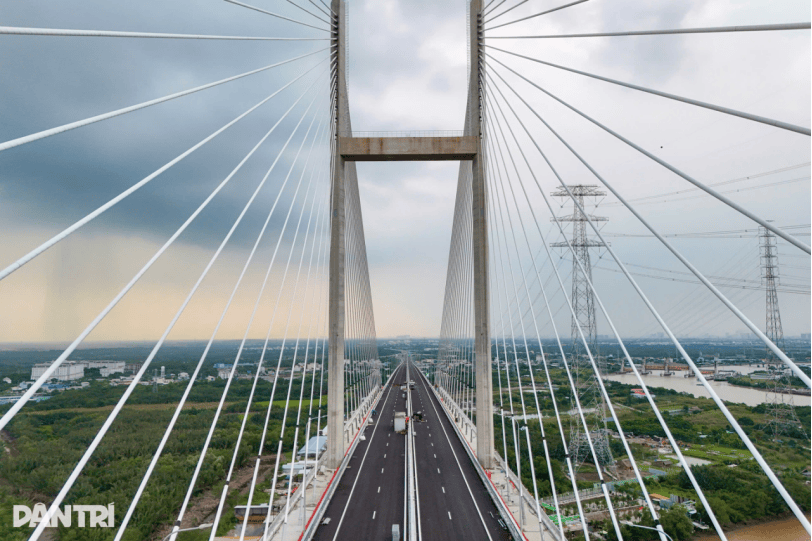
The two H-shaped towers standing tall in the middle of the Soai Rap River are likened to "steel gates", symbolizing the will to rise and develop of the Southern region.

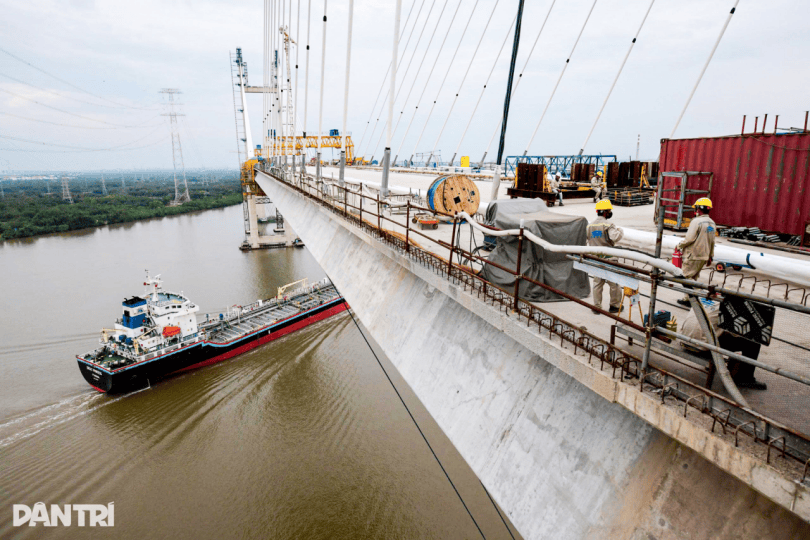
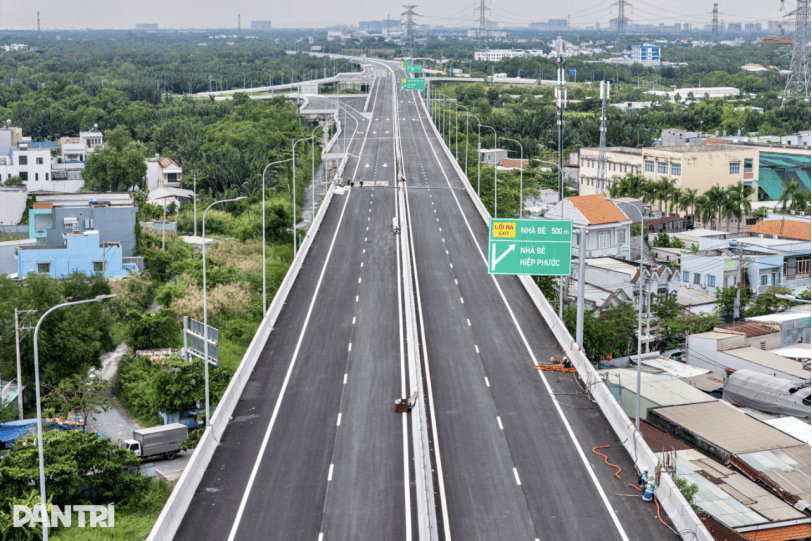
Currently, Binh Khanh Bridge has basically completed the main items. The final stages, such as asphalt pavement, installation of median strips, railings, lighting systems, traffic signs, and fire prevention and fighting, are being urgently deployed.
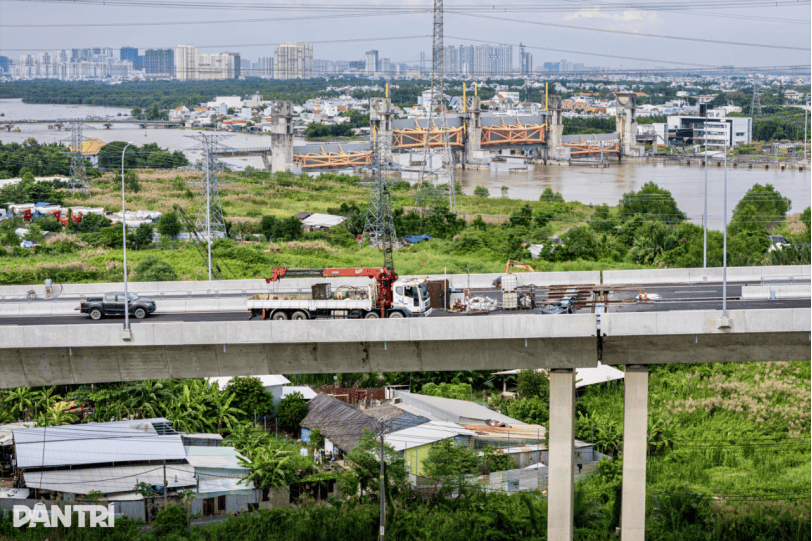
According to information from the contractor, load testing and technical inspection have been successfully carried out, ensuring that the project is qualified for acceptance and handover in the coming time.
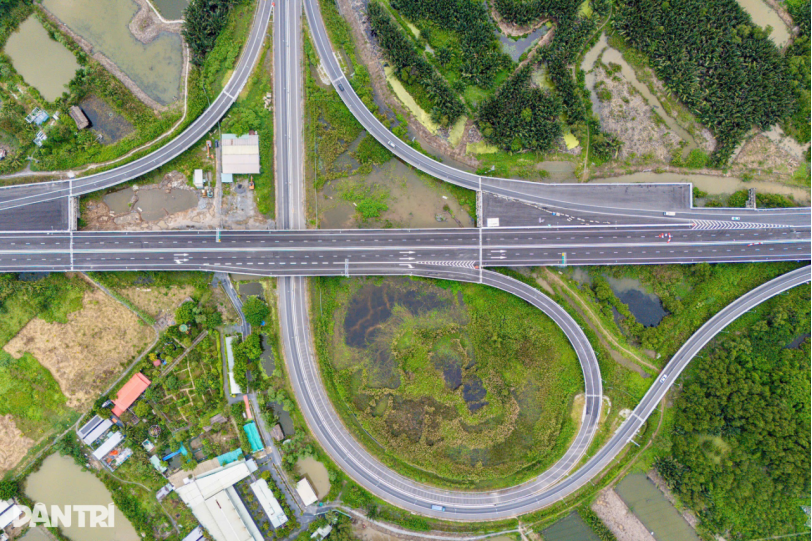
The expressway section connecting Binh Khanh bridge with the access roads on both sides has also been completed, ready to connect the entire Ben Luc - Long Thanh route smoothly when the bridge is put into use.

The Ben Luc - Long Thanh Expressway, 57.8km long, passing through Tay Ninh, Ho Chi Minh City, and Dong Nai, with a total investment of more than VND29,587 billion, plays a strategic role in connecting the East - West of the South. This route will reduce the load on National Highway 1 and National Highway 51, shortening travel time from the West to Long Thanh Airport and Cai Mep - Thi Vai Port.
As a key project, Binh Khanh Bridge plays a key role in connecting the East-West South region, shortening the distance from the West to Ho Chi Minh City and the Southeastern provinces, while expanding the space for urban development, logistics, and tourism for the South Saigon area.

About 5km away, Phuoc Khanh Bridge - the remaining cable-stayed bridge of the Ben Luc - Long Thanh Expressway is also under construction. It is expected that when the Phuoc Khanh Bridge is completed in 2026, the entire expressway, more than 57km long, will be connected, contributing to the formation of a modern inter-regional expressway axis, promoting trade and economic development in the southern region. (Photo: Trinh Nguyen)
Source: https://dantri.com.vn/thoi-su/cau-day-vang-co-tinh-khong-cao-nhat-viet-nam-sap-hoan-thien-20251021213037656.htm